September 18, 2026
Call First, Build Second: Why Conversation Makes Better Websites
Conversation-first website building helps AI understand the business before generating the website. Instead of jumping from a short prompt directly into design, Tikka Burrito can ask questions, clarify requirements, and build based on the user's real goals. This approach can create more relevant websites for non-technical founders and small businesses while reducing guesswork and unnecessary revisions.
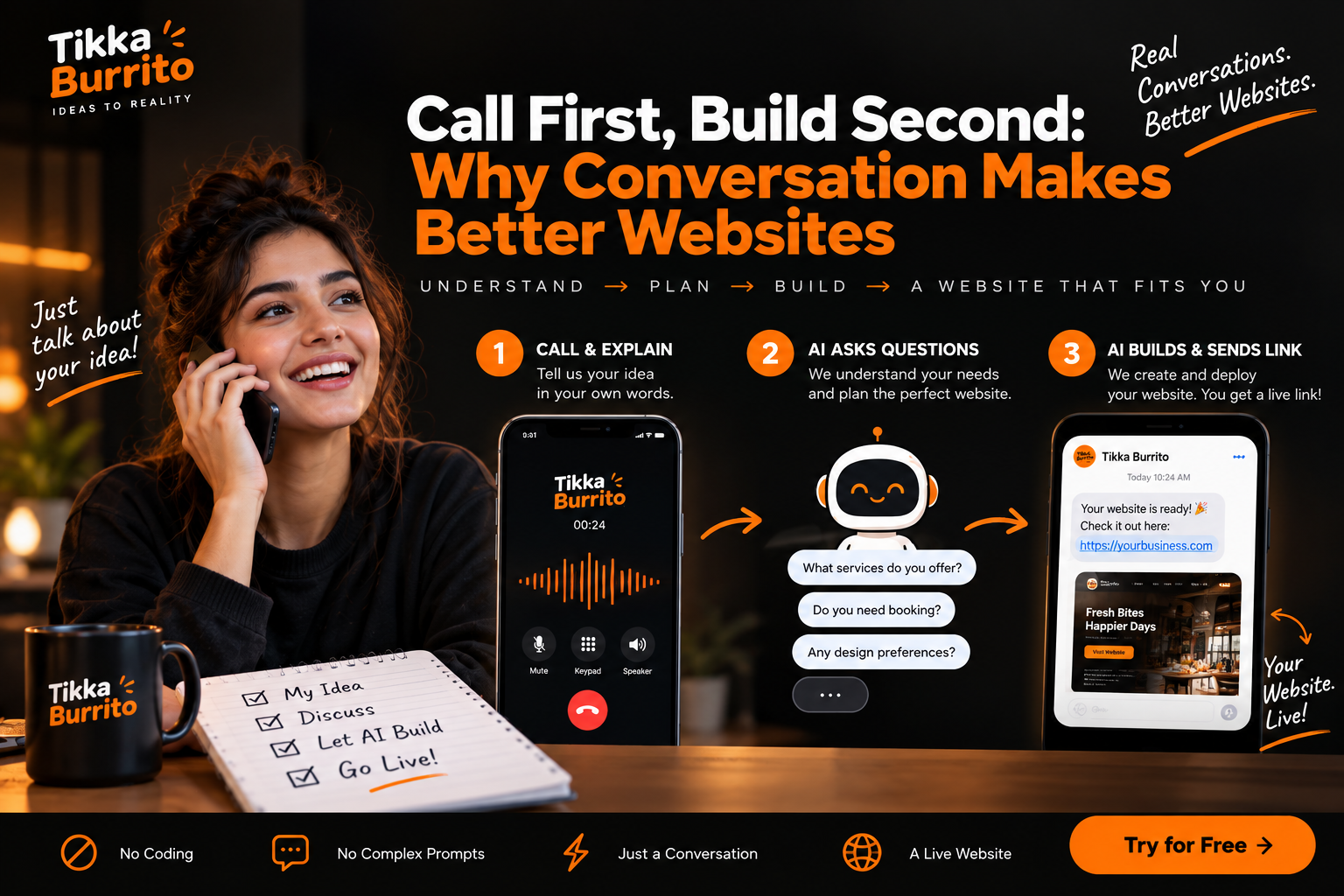
Most AI website builders are designed to start building as soon as you give them a prompt. That sounds efficient, but there is a problem: if the AI does not fully understand the business, the customer, or the goal, it can create something that looks polished but still misses the point. A better approach is to slow down for a moment before generation starts. Ask questions. Understand the business. Clarify the audience. Identify what visitors should actually do on the website. That is the idea behind conversation-first website building. Instead of jumping directly from prompt to page, Tikka Burrito focuses on requirements before generation so the website is based on what the user really needs. Why Building Too Fast Can Create the Wrong Website Speed is one of the biggest advantages of AI website builders, but speed alone does not guarantee a useful result. If someone says, “Build me a website for my bakery,” there are still many unanswered questions. Does the bakery sell custom cakes? Can customers order online? Is the main goal to drive foot traffic, collect inquiries, or accept bookings? Should the website show prices? Does the business rely on WhatsApp? Is the bakery targeting weddings, birthdays, or daily walk-in customers? If the AI starts generating immediately, it has to guess. And guessed requirements often lead to generic websites. Good Websites Start With Better Questions A strong website should be built around the business, not around a template. Before building, useful questions might include: - Who is the target customer? - What is the main goal of the website? - What services or products should be highlighted? - What action should visitors take first? - Does the business need booking, payments, forms, or WhatsApp contact? - What style or tone should the website have? These questions may seem simple, but they can completely change the final result. That is why AI requirement gathering is so important. The better the AI understands the problem, the better it can shape the website around the real need. Why Conversation Works Better Than a One-Shot Prompt Most people do not think in perfect website specifications. They think in fragments. A small-business owner may start by saying, “I need a professional website.” Then, after talking for a few minutes, they remember that most customers ask about pricing. A little later, they realize they need appointment booking. Then they mention that nearly every inquiry comes through WhatsApp. This is normal. Ideas become clearer while we talk about them. Conversation Helps Discover What the User Actually Wants A conversational AI website builder can use that natural process instead of forcing the user to prepare everything in advance. The user explains the business in simple language. The AI listens, identifies missing details, asks follow-up questions, and gradually turns the discussion into a clear set of requirements. For example, someone may say: “I run a home cleaning business and need a website.” The AI can then ask whether customers should select different cleaning packages, whether prices should be shown, which locations the business serves, and whether people should book online or contact the business directly. By the time the website is generated, the AI has much more context. That is the difference between prompt-to-website and conversation-to-website. The Tikka Burrito Approach: Understand First, Build Second Tikka Burrito is designed around the idea that AI should not just accept instructions. It should help understand the idea before building it. Users can start through a phone call, web voice, a text prompt, or WhatsApp text and voice notes. Regardless of the method, the goal is not simply to capture the words. The goal is to understand what the user is trying to create. Call First For many users, a phone call can be the most natural starting point. Instead of sitting down to write a long prompt, they can simply explain the business: “I have a fitness coaching business. I help busy professionals lose weight and stay consistent. I need a website where people can understand my program and book a consultation.” That already gives the AI useful context. Clarify the Requirements The AI can then ask what kind of coaching is offered, whether sessions are online or in person, whether testimonials should be shown, and whether users should book directly or submit an inquiry. The conversation fills in the gaps. Build After Understanding Once the requirements are clearer, the AI can move into generation. That may include creating the homepage, service sections, testimonials, contact forms, booking options, calls to action, and mobile-friendly layouts. The important point is that the website is built from the conversation, not from assumptions. Better Requirements Lead to Better Websites This may sound obvious, but it is one of the biggest differences between a generic AI-generated website and a useful business website. If the AI knows the audience, it can write better copy. If it knows the business goal, it can create better calls to action. If it knows how customers contact the business, it can design the right conversion path. If it knows which services matter most, it can prioritize the right sections. Requirements Shape More Than Features Requirements are not only about technical functionality. They also affect: - Content: What the website should say - Structure: Which pages and sections are needed - Design: What style matches the business - Conversion: What action visitors should take - User experience: How easily customers can find what they need - Functionality: Booking, forms, payments, WhatsApp, galleries, or other features This is why requirement gathering should happen before generation, not after the website is already built. Why This Matters for Non-Technical Founders and Small Businesses Non-technical users often know their businesses extremely well, but they may not know how to translate that knowledge into website requirements. A restaurant owner knows what customers ask every day. A photographer knows what clients care about before booking. A consultant knows which questions leads ask before signing up. The problem is not a lack of business knowledge. The problem is turning that knowledge into software. A conversational AI website builder can help bridge that gap. You Do Not Need to Think Like a Developer The user does not need to say, “Create a responsive service card component with a conversion-focused CTA.” They can simply say, “I want people to understand my services quickly and contact me.” The AI can translate the intention into the website structure. That makes no-code development more useful because the user can stay focused on the business instead of learning technical terminology. Conversation Before Generation Creates a More Human Building Process The biggest advantage of conversation-first website building is not just better requirements. It also creates a more natural experience. When people work with a designer or developer, they usually begin with a conversation. The professional asks questions, understands the business, and then starts designing. AI can follow the same pattern. Instead of: Prompt → Generate → Fix mistakes the process becomes: Explain → Clarify → Understand → Generate That can reduce unnecessary revisions because the AI starts with better context. Fewer Assumptions, Better First Versions The first version of any website may still need changes. But when the AI understands the business before building, the starting point can be much closer to what the user actually wants. That matters for busy founders and small-business owners who do not want to spend hours correcting an AI-generated website that misunderstood their business from the beginning. Call First, Build Second The future of AI website building is not only about making generation faster. It is about making the generation smarter. Tikka Burrito's approach is simple: let the user explain the idea first. Ask the right questions. Understand the requirements. Then build. That can happen through a phone call, web voice, text, or WhatsApp. The interface can change, but the principle stays the same. Conversation first. Generation second. Because the better the AI understands what you need, the better the website it can help create.